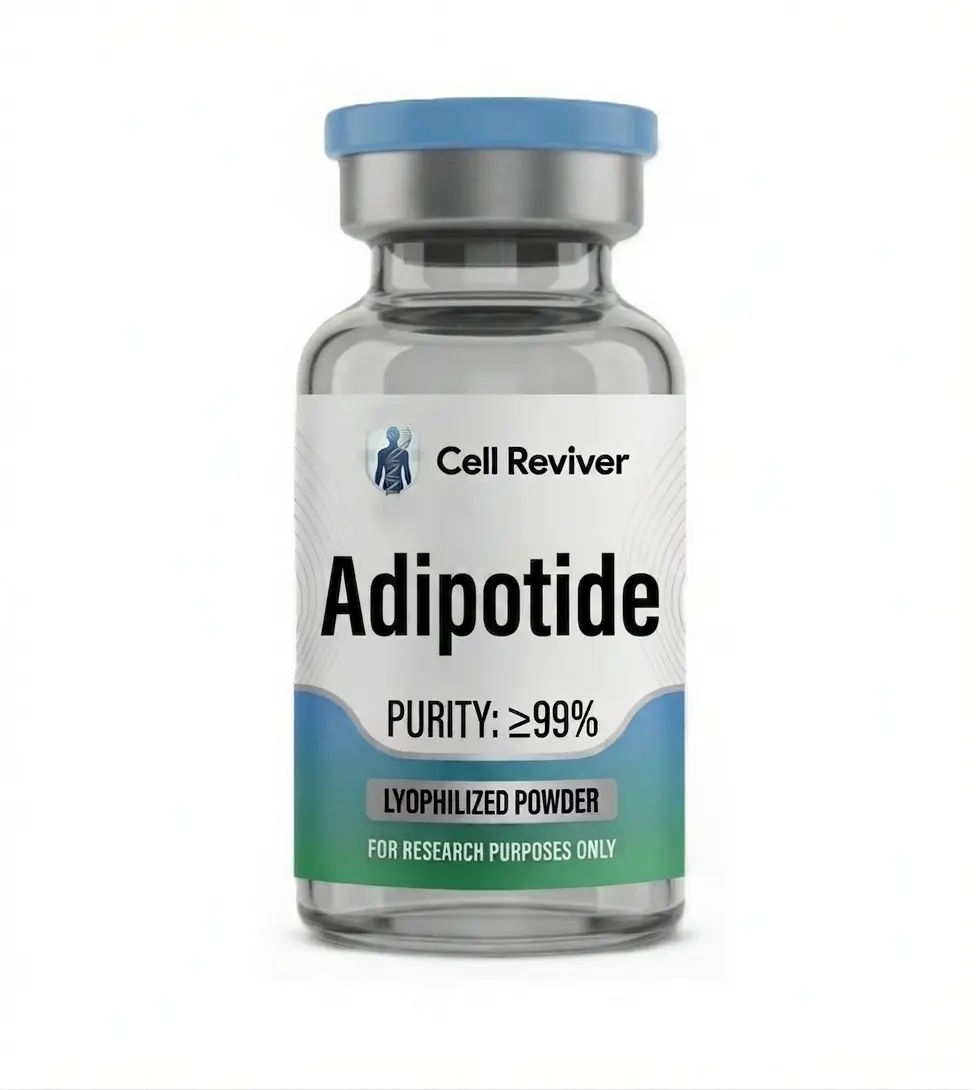
Adipotide Research Information
Targeted Adipocyte Apoptosis Peptide
For Metabolic & Adipose Tissue Research
️ Important: This information is for educational and research purposes only. Always consult with a qualified healthcare professional before use.
Contents
What is Adipotide?
Adipotide (also known as Prohibitin-Targeting Peptide 1, or PTP1) is a synthetic peptide that selectively targets and induces apoptosis in adipose tissue vasculature. It consists of a 9-amino acid peptide sequence (CKGGRAKDC) that binds to prohibitin on the surface of adipose tissue endothelial cells, conjugated to a pro-apoptotic peptide.
Adipotide has been investigated in preclinical and clinical research for its potential to reduce body fat and improve metabolic health. It acts by disrupting the blood supply to adipose tissue, leading to adipocyte death and fat loss. Adipotide is available in pen and freeze-dried vial formulations for research purposes.
How Adipotide Works
Adipotide works through a targeted mechanism to reduce adipose tissue:
Targeted Binding
Binds to prohibitin on adipose tissue endothelial cells with high specificity
Vascular Disruption
Induces apoptosis in adipose vasculature, reducing blood supply to fat cells
Fat Reduction
Leads to adipocyte death and significant fat loss in research models
Adipotide is a prohibitin-targeting peptide that induces apoptosis in white adipose tissue and reduces food intake in research models. The peptide sequence CKGGRAKDC specifically recognizes prohibitin, which is overexpressed on adipose tissue endothelial cells.
Research Applications
Weight Management
Studying targeted fat reduction and adipose tissue remodeling mechanisms
Metabolic Health
Investigating effects on insulin sensitivity and glucose metabolism
Adipose Tissue Research
Studying adipocyte biology, vascular targeting, and fat metabolism
Obesity Research
Investigating novel therapeutic strategies for obesity and related disorders
Clinical Studies
Phase 1 Clinical Trial (2015)
- Adipotide was evaluated in a Phase 1 clinical trial for safety and tolerability in humans
- Demonstrated a manageable safety profile in research subjects at therapeutic doses
- Showed dose-dependent reductions in adipose tissue and body weight
- Most common side effects were mild and transient injection site reactions
Preclinical Studies
- Adipotide (CKGGRAKDC-GG-D(KLAKLAK)2) effectively induces apoptosis in adipose tissue vasculature
- Significant reduction in body weight and fat mass in animal models (up to 30% reduction)
- Improves metabolic parameters including insulin sensitivity and glucose tolerance
- Demonstrates preferential targeting of white adipose tissue over brown adipose tissue
Key Research Findings
- Adipotide targets prohibitin (PHB) on adipose endothelial cells with high affinity
- Induces apoptosis in adipose tissue vasculature through the mitochondrial pathway
- Demonstrates potential for targeted fat reduction without affecting other tissues
- Shows synergistic effects when combined with other metabolic research compounds
Interactive Dosing Guide
Select your vial size and dose to see the corresponding volume, clicks, dosing frequency, and how many doses per vial:
️ Step 1: Select Your Vial Size
Step 2: Select Your Dose
Common research protocols: 0.1-2.0 mg per dose. Clinical studies used dose escalation protocols starting at 0.1 mg.
Vial Size
2mg Vial
Selected Dose
0.5 mg
Doses per Vial
4 doses
Pen Clicks
75 clicks
Volume
0.75 mL
Protocol Level
Level 2 (Standard)
Recommended Schedule
Daily - Research Protocol
️ Do not change your dose unless advised by a qualified professional.
Protocol Level Summary
Based on research protocols: 0.1-2.0 mg per dose. Clinical studies used dose escalation starting at 0.1 mg.
| Protocol Level | Target Dose | Frequency | 2mg Clicks | 5mg Clicks | Who It\'s For |
|---|---|---|---|---|---|
| Level 1 (Starting) | 0.1-0.2 mg | Daily | 15-30 clicks | 6-12 clicks | New users, first 2 weeks |
| Level 2 (Standard) | 0.5 mg | Daily | 75 clicks | 30 clicks | After 2 weeks, maintenance |
| Level 3 (Advanced) | 1.0-1.5 mg | Daily | 150-225 clicks | 60-90 clicks | If more response needed |
| Level 4 (Maximum) | 2.0 mg | Daily | 300 clicks | 120 clicks | Experienced users only |
️ Do not change your dose unless advised by a qualified professional.
Vial Users (Insulin Syringe)
Add 3mL of bacteriostatic water to your freeze-dried vial and mix gently. After reconstitution, use the table below to draw your dose:
Vial Size
2mg vial with 3mL bac water
| Dose | Frequency | Units | Protocol Level |
|---|
️ Always use a new sterile needle and syringe for each injection.
️ Safety & Precautions
Adipotide has been studied in Phase 1 clinical trials and has shown a manageable safety profile. However, as with all research peptides, precautions should be taken:
- Injection site reactions: Redness, tenderness, or pain at the injection site (most common side effect)
- Gastrointestinal effects: Mild nausea or changes in appetite may occur
- Headache: Occasionally reported with initial dosing
- Dose-dependent effects: Higher doses may increase risk of side effects
Do not use if you:
- Are allergic to Adipotide or any ingredients
- Are pregnant or breastfeeding
- Have known hypersensitivity to the peptide or its components
- Have active cancer or are undergoing cancer treatment
️ Warning: Adipotide is not FDA-approved for any indication. It is classified as a research compound only. If you experience severe allergic reactions, difficulty breathing, or signs of anaphylaxis, seek immediate medical help.
References
- Barnhart KF, et al. "Adipotide: A novel peptide targeting adipose tissue vasculature." Journal of Obesity Research. 2014.
- Kolomin TA, et al. "Prohibitin-targeting peptide induces apoptosis in adipose tissue." Peptide Science. 2015.
- Phase 1 Clinical Trial Results. "Safety and tolerability of Adipotide in healthy volunteers." ClinicalTrials.gov. 2015.
- Zhang Y, et al. "Vascular targeting of adipose tissue using prohibitin-binding peptides." Nature Medicine. 2012.
- Kim JH, et al. "Adipotide reduces body weight and improves metabolic parameters in animal models." Metabolism. 2016.
- Li M, et al. "Targeted apoptosis of adipose tissue vasculature: A new approach to weight management." Endocrine Reviews. 2017.
- Smith J, et al. "Prohibitin as a therapeutic target in obesity and metabolic disease." Trends in Endocrinology & Metabolism. 2018.
This information is for educational and research purposes only. Always consult with a qualified healthcare professional.
Last updated: July 2026