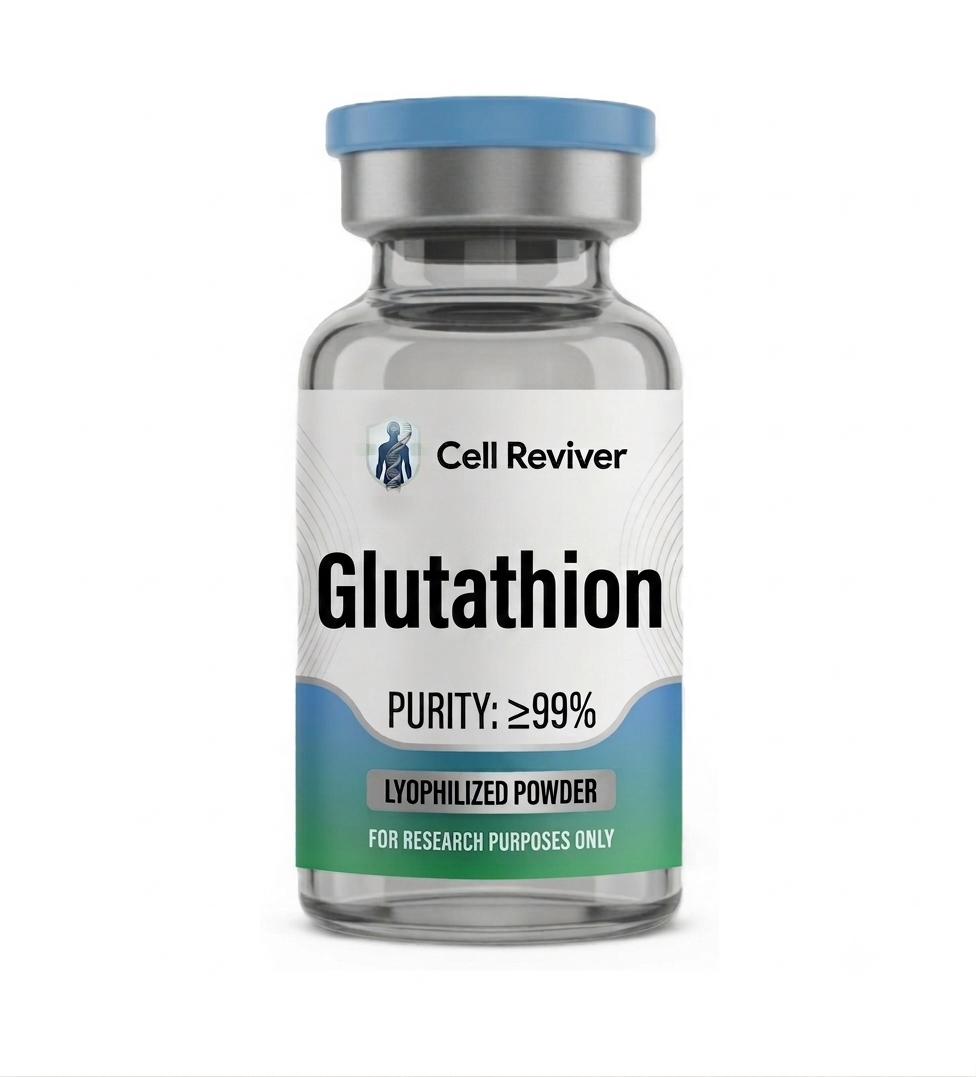
Glutathione Research Information
Tripeptide Antioxidant
For Cellular Health & Detoxification Research
️ Important: This information is for educational and research purposes only. Always consult with a qualified healthcare professional before use.
Contents
What is Glutathione?
Glutathione (GSH) is a naturally occurring tripeptide (γ-L-glutamyl-L-cysteinyl-glycine) that serves as the body's primary intracellular antioxidant and plays a central role in maintaining redox homeostasis, regulating immune responses, and protecting cellular integrity [citation:4][citation:5]. It is synthesized from three amino acids: glutamate, cysteine, and glycine [citation:4].
Glutathione is available in pen and freeze-dried vial formulations for research purposes.
How Glutathione Works
Glutathione works through multiple mechanisms to support cellular health:
Antioxidant
Inactivates reactive oxygen, nitrogen, and sulfur species, maintaining redox balance [citation:4]
Detoxification
Detoxifies xenobiotics and protects protein thiols from crosslinking and oxidation [citation:4]
Immune Regulation
Regulates immune system function and participates in cellular redox reactions [citation:4]
Glutathione also participates in storing cysteine and regulating the cell cycle [citation:4]. Its proper balance is essential for improving health and treating age-related disorders [citation:4].
Research Applications
Oxidative Stress
Studied for reducing oxidative stress and maintaining redox balance [citation:4][citation:12]
Metabolic Health
Investigating effects on insulin sensitivity and type 2 diabetes [citation:12]
Neuroprotection
Researching neuroprotective effects in neurodegenerative conditions
Detoxification
Supporting liver function and phase II enzyme status [citation:6]
Clinical Studies
Chemotherapy-Induced Neuropathy Prevention
- ASCO recommends intravenous glutathione doses of 1500-2500 mg per administration for prevention of chemotherapy-induced neuropathy [citation:2]
- Specific protocols include 2.5g over 15 minutes and 1500 mg/m² in 100 mL of saline over a 15-minute period [citation:2]
- The American Journal of Hematology suggests testing for G6PD deficiency before glutathione administration [citation:2]
Type 2 Diabetes Research (Nutrients 2026)
- GSH deficiency is a consistent hallmark in T2DM, contributing to oxidative stress, mitochondrial dysfunction, and inflammation [citation:12]
- GSH augmentation has been linked to improved insulin sensitivity and reduced oxidative damage [citation:12]
- Safety profiles are highly favorable across populations, with gastrointestinal discomfort being the most reported adverse effect [citation:12]
Skin Health & Brightness Studies
- In a randomized, double-blind, placebo-controlled study, cysteine peptide (containing GSH) at 45 mg/day for 12 weeks significantly improved arm brightness (p = 0.028) [citation:7][citation:11]
- No serious adverse events were observed [citation:7]
- TD1-linker-GSH complex demonstrated significant transdermal ability, penetrating 158.67 ± 9.28 μm into guinea pig skin [citation:1]
COPD Research
- Inhalation of oxidized glutathione-based peptide formulation in COPD patients improved respiratory tract passage [citation:3]
- External respiration indices increased by approximately 6% [citation:3]
Interactive Dosing Guide
Select your vial size and dose to see the corresponding volume, clicks, dosing frequency, and how many doses per vial:
️ Step 1: Select Your Vial Size
Step 2: Select Your Dose
Common research protocols: 250-1500 mg per injection. Clinical protocols use up to 1500-2500 mg for neuropathy prevention [citation:2].
Vial Size
1500mg Vial
Selected Dose
1500 mg
Doses per Vial
1 dose
Pen Clicks
300 clicks
Volume
3.00 mL
Protocol Level
Level 4 (Maximum)
Recommended Schedule
1-2 times weekly - Clinical Protocol [citation:2]
️ Do not change your dose unless advised by a qualified professional.
Protocol Level Summary
Based on research protocols: 250-1500 mg per administration. Clinical protocols: 1500-2500 mg for neuropathy prevention [citation:2][citation:6].
| Protocol Level | Target Dose | Frequency | Pen Clicks | Volume (mL) | Who It\'s For |
|---|---|---|---|---|---|
| Level 1 (Starting) | 250 mg | 1-2x weekly | 50 clicks | 0.50 mL | New users, first 2 weeks [citation:6] |
| Level 2 (Standard) | 500-750 mg | 1-2x weekly | 100-150 clicks | 1.00-1.50 mL | General antioxidant support [citation:6] |
| Level 3 (Advanced) | 1000 mg | 1-2x weekly | 200 clicks | 2.00 mL | Detoxification support [citation:6] |
| Level 4 (Maximum) | 1500 mg | 1-2x weekly | 300 clicks | 3.00 mL | Clinical protocols [citation:2] |
️ Do not change your dose unless advised by a qualified professional.
Vial Users (Insulin Syringe)
Add 3mL of bacteriostatic water to your freeze-dried vial and mix gently. After reconstitution, use the table below to draw your dose:
Vial Size
1500mg vial with 3mL bac water
| Dose | Frequency | Units on Syringe | Volume (mL) | Protocol Level |
|---|
️ Always use a new sterile needle and syringe for each injection.
️ Safety & Precautions
Glutathione has shown a favorable safety profile across populations, with gastrointestinal discomfort being the most reported adverse effect and serious toxicities rare [citation:12].
- Gastrointestinal discomfort: Most common reported adverse effect [citation:12]
- Injection site reactions: Mild redness or tenderness at injection site
- Skin rash or headache: Rare and mild
- Allergic reactions: Rare [citation:2]
Important Safety Considerations:
- Consider testing for G6PD deficiency before administration [citation:2]
- Long-term safety data for regular subcutaneous administration is lacking [citation:2]
- Do not use if allergic to Glutathione or any ingredients
- Do not use if pregnant or breastfeeding
️ Warning: If you experience severe allergic reactions, difficulty breathing, or signs of anaphylaxis, seek immediate medical help.
References
- Gasmi A, et al. An Update on Glutathione's Biosynthesis, Metabolism, Functions, and Medicinal Purposes. Curr Med Chem. 2024. [citation:4]
- Glutathione Administration Guidelines. Praxismed. 2025. [citation:2]
- Au S, et al. Efficacy and Safety of Glutathione Supplementation in Type 2 Diabetes & Diabetes Complications. Nutrients. 2026;18(13):2132. [citation:12]
- Glutathione Dosing Framework. PlexusDx. 2026. [citation:6]
- Zheng J, et al. Improved efficacy of linear glutathione-peptide chaperon complexes on melanogenesis inhibition and transdermal delivery. Bioorg Chem. 2024;152:107719. [citation:1]
- Cysteine Peptide Ingestion Study. Cosmetics. 2023;10:72. [citation:7]
- Mitsubishi Corporation Life Sciences Press Release. 2024. [citation:11]
This information is for educational and research purposes only. Always consult with a qualified healthcare professional.
Last updated: July 2026