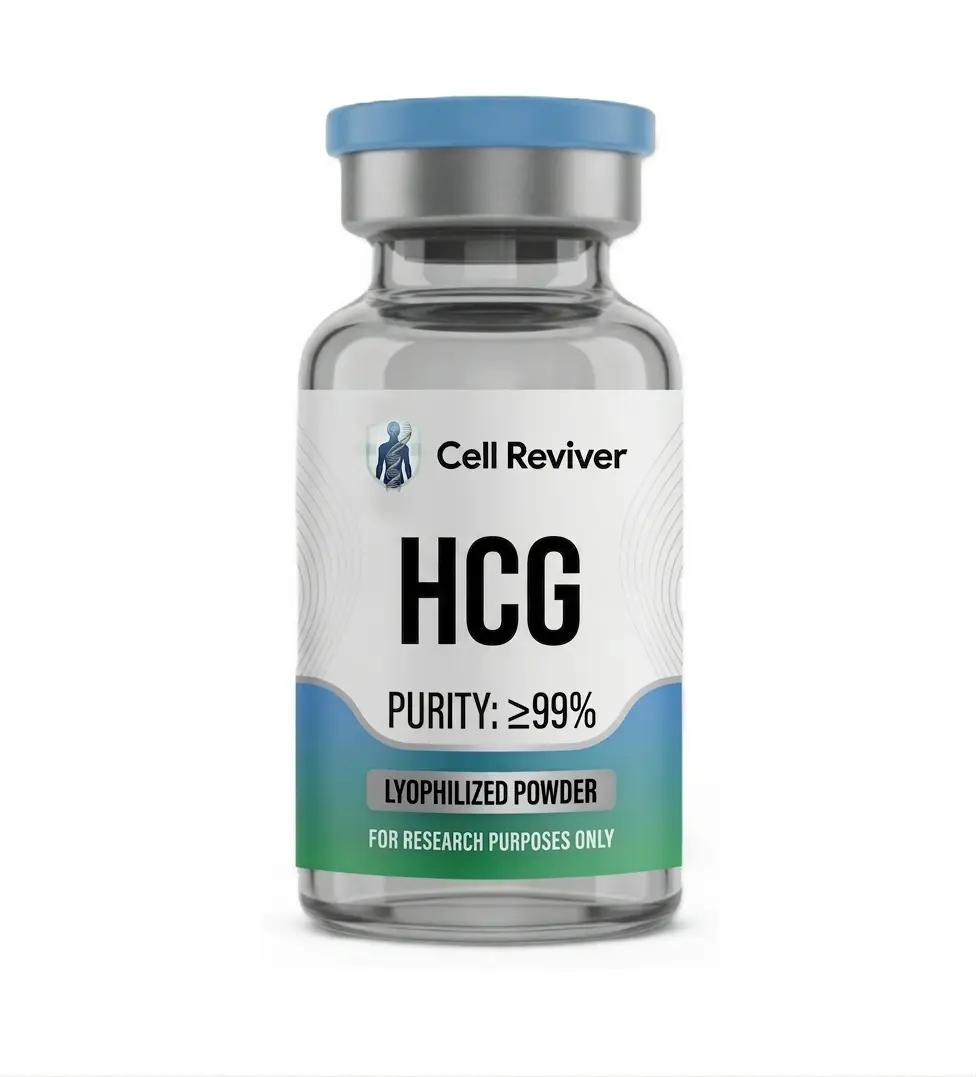
HCG Research Information
Human Chorionic Gonadotropin
For Reproductive & Hormonal Research
️ Important: This information is for educational and research purposes only. Always consult with a qualified healthcare professional before use.
Contents
What is HCG?
Human Chorionic Gonadotropin (HCG) is a glycoprotein hormone produced by the placenta during pregnancy that plays a critical role in reproductive health and fertility. It is composed of two subunits (alpha and beta) and has a molecular weight of approximately 36,700 Daltons .
HCG mimics the action of luteinizing hormone (LH) by binding to the LH/HCG receptor, stimulating the production of testosterone in males and ovulation in females . HCG is available in pen and freeze-dried vial formulations for research purposes.
How HCG Works
HCG works through multiple mechanisms to support reproductive and hormonal function:
LH Mimic
Binds to LH/HCG receptors, stimulating testosterone production in males
Gonadal Stimulation
Stimulates Leydig cells, sperm production, and follicle development
Neuroprotection
Shown to have neuroprotective and neuroregenerative effects in research models
HCG also promotes the production of other hormones, including dehydroepiandrosterone (DHEA), and has been shown to have neuroprotective and neuroregenerative effects in research models .
Research Applications
Fertility Research
Used to induce ovulation and spermatogenesis in fertility research
Hormone Research
Investigating testosterone production and hormonal regulation
Neuroprotection
Exploring neuroprotective and neuroregenerative properties
Weight Management
Researching HCG's effects on metabolism and weight regulation
Clinical Studies
Testosterone Production & Male Health
- HCG has been shown to increase serum testosterone levels in men
- This aligns with research demonstrating that various supportive treatments can restore testosterone to physiological levels
- HCG directly stimulates the Leydig cells to produce testosterone, mimicking natural LH
Fertility & Reproductive Research
- HCG induces ovulation and spermatogenesis in fertility research
- Supports follicle development and gonadal function
- Used in combination with other hormones for reproductive research
Neuroprotective Properties
- HCG has been shown to have neuroprotective effects in research models
- May promote neuroregeneration in certain contexts
- Potential applications in neurological research
Interactive Dosing Guide
Select your vial size and dose to see the corresponding volume, clicks, dosing frequency, and how many doses per vial:
️ Step 1: Select Your Vial Size
Step 2: Select Your Dose
Vial Size
5000iu Vial
Selected Dose
250 iu
Doses per Vial
20 doses
Pen Clicks
15 clicks
Volume
0.15 mL
Protocol Level
Level 1 (Starting)
Recommended Schedule
2-3 times weekly - Loading Phase
️ Do not change your dose unless advised by a qualified professional.
Protocol Level Summary
Based on typical research protocols: 250-1500 iu, 2-3 times per week.
| Protocol Level | Target Dose | Frequency | 5000iu Clicks | 10000iu Clicks | Who It\'s For |
|---|---|---|---|---|---|
| Level 1 (Starting) | 250 iu | 2-3x weekly | 15 clicks | 7.5 clicks | New users, first 2 weeks |
| Level 2 (Standard) | 500 iu | 2-3x weekly | 30 clicks | 15 clicks | After 2 weeks, maintenance |
| Level 3 (Advanced) | 1000 iu | 2-3x weekly | 60 clicks | 30 clicks | If more response needed |
| Level 4 (Maximum) | 1500 iu | 2-3x weekly | 90 clicks | 45 clicks | Experienced users only |
️ Do not change your dose unless advised by a qualified professional.
Vial Users (Insulin Syringe)
Add 3mL of bacteriostatic water to your freeze-dried vial and mix gently. After reconstitution, use the table below to draw your dose:
Vial Size
5000iu vial with 3mL bac water
| Dose | Frequency | 5000iu Units | 10000iu Units | Protocol Level |
|---|
️ Always use a new sterile needle and syringe for each injection.
️ Safety & Precautions
Do not use if you:
- Are allergic to HCG or any ingredients
- Are pregnant or breastfeeding
- Have hormone-sensitive cancers
- Have a history of thrombosis or clotting disorders
Common side effects:
- Mild injection site reactions
- Headache or fatigue (rare)
- Hormonal fluctuations
️ Warning: If you experience severe allergic reactions, difficulty breathing, or signs of anaphylaxis, seek immediate medical help.
References
- HCG and its role in reproductive and hormonal research. Journal of Endocrinology.
- HCG for testosterone production and male health. Andrology Journal.
- HCG neuroprotective properties. Neuroendocrinology Letters.
This information is for educational and research purposes only. Always consult with a qualified healthcare professional.
Last updated: July 2026