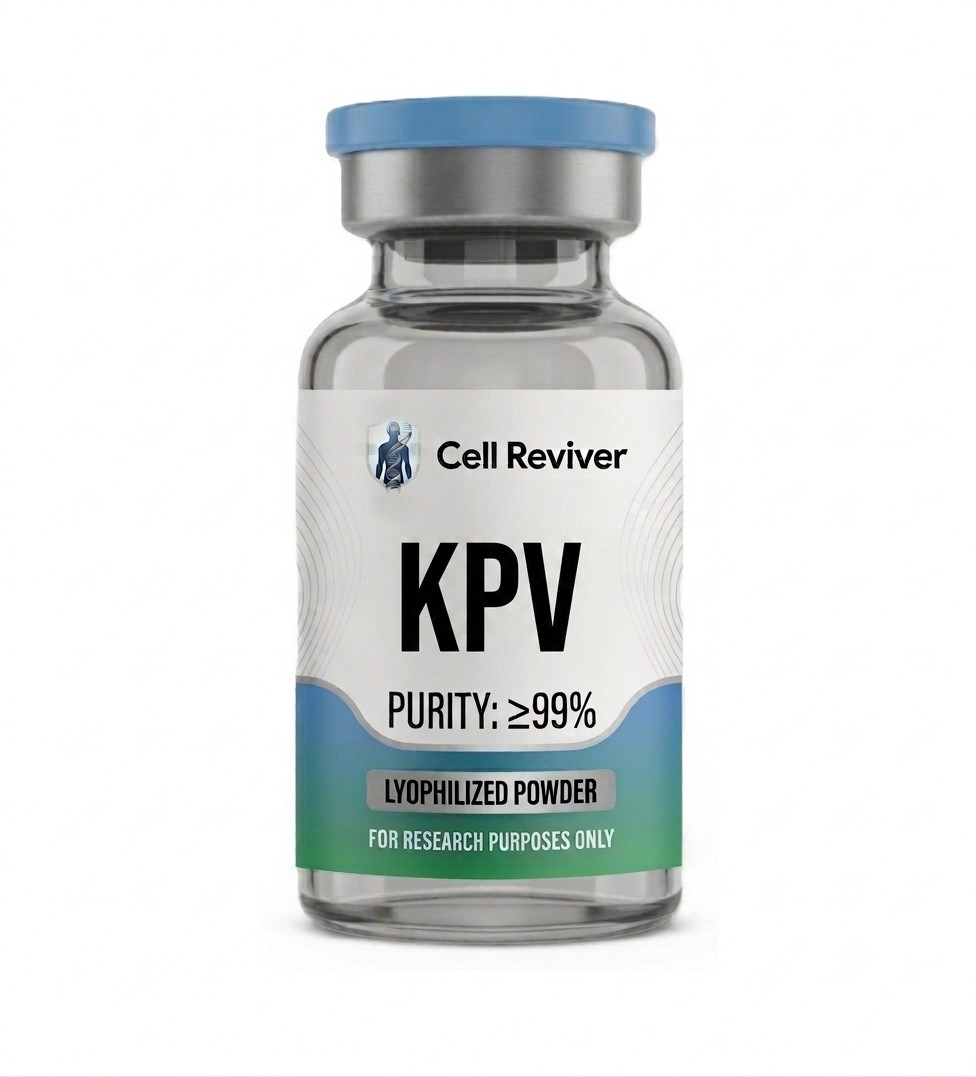
KPV Research Information
C-Terminal α-MSH Tripeptide
For Anti-Inflammatory & Immune Research
️ Important: This information is for educational and research purposes only. Always consult with a qualified healthcare professional before use.
Contents
What is KPV?
KPV is a naturally occurring tripeptide (Lysine-Proline-Valine) that corresponds to the C-terminal fragment of alpha-melanocyte-stimulating hormone (α-MSH) [9]. It was identified as the active anti-inflammatory fragment of α-MSH in research dating to the 1990s [11]. Unlike full-length α-MSH, KPV retains significant anti-inflammatory activity while shedding the pigmentation effects associated with the parent hormone [3][11].
KPV is available in pen and freeze-dried vial formulations for research purposes.
How KPV Works
KPV works through a unique, melanocortin receptor-independent mechanism to suppress inflammation:
NF-κB Inhibition
Blocks NF-κB activation, stabilizing IκBα and preventing nuclear translocation of p65RelA [11]
PepT1 Transport
Enters intestinal epithelial cells through PepT1, which is upregulated during inflammation [11]
Cytokine Reduction
Reduces pro-inflammatory cytokines including TNF-α, IL-1β, IL-6, and MMP-9 [11]
Importantly, KPV's anti-inflammatory effect does not work through melanocortin receptors (MC1-R, MC3-R) [2][11]. Studies have shown KPV retains its gut anti-inflammatory activity even in melanocortin-receptor knockout models, indicating the effect is receptor-independent [11]. KPV also exhibits direct antimicrobial activity against organisms such as Staphylococcus aureus and Candida albicans [7][11].
Research Applications
Inflammatory Bowel Disease
Strongest preclinical signal; reduces mucosal edema and protects intestinal barrier function [3][11]
Airway Inflammation
Inhibits NF-κB and reduces IL8 and eotaxin secretion in bronchial epithelial cells [10]
Antimicrobial Research
Exhibits direct antimicrobial activity against bacteria and fungi [7][11]
Clinical Studies
Inflammatory Bowel Disease Models (Gastroenterology 2008)
- Dalmasso and colleagues reported KPV retained gut anti-inflammatory activity even in melanocortin-receptor knockout models [11]
- Oral KPV administration in DSS and TNBS colitis models showed reduced mucosal edema, protection of intestinal barrier function, and tissue repair [3][11]
- KPV uptake is mediated by PepT1, which is upregulated during inflammation, making the peptide more effective in inflamed tissue [11]
Inflammation & Immune Modulation (ScienceDirect 2025)
- KPV inhibited PMN migration with up to 42% reduction at effective doses in crystal-induced peritonitis models [2]
- Systemic treatment with KPV resulted in significant reduction in polymorphonuclear leukocyte accumulation in the peritoneal cavity [2]
- KPV inhibits macrophage activation and release of KC and IL-1β [2]
Airway Epithelial Research
- KPV evoked dose-dependent inhibition of NF-κB, matrix metalloproteinase-9 activity, IL8 and eotaxin secretion in human bronchial epithelial cells [6]
- The KPV effect was associated with nuclear import, IκBα stabilisation, and suppressed nuclear translocation of p65RelA [6][10]
Antimicrobial & Wound Research
Interactive Dosing Guide
Select your vial size and dose to see the corresponding volume, clicks, dosing frequency, and how many doses per vial:
️ Step 1: Select Your Vial Size
Step 2: Select Your Dose
Common protocol: 200-500 mcg/day, gradual escalation recommended [1][5][12]
Vial Size
10mg Vial
Selected Dose
0.25 mg
Doses per Vial
40 doses
Pen Clicks
7.5 clicks
Volume
0.075 mL
Protocol Level
Level 2 (Standard)
Recommended Schedule
Once daily - Loading Phase (1-2 weeks)
️ Do not change your dose unless advised by a qualified professional.
Protocol Level Summary
Based on research protocols: 200-500 mcg/day, gradual escalation recommended [1][5][12].
| Protocol Level | Target Dose | Frequency | Pen Clicks | Volume (mL) | Who It\'s For |
|---|---|---|---|---|---|
| Level 1 (Starting) | 0.2 mg | Once daily | 6 clicks | 0.06 mL | New users, first week |
| Level 2 (Standard) | 0.25 mg | Once daily | 7.5 clicks | 0.075 mL | Week 2-3 |
| Level 3 (Advanced) | 0.3-0.4 mg | Once daily | 9-12 clicks | 0.09-0.12 mL | Weeks 3-4 |
| Level 4 (Maintenance) | 0.5 mg | Once daily | 15 clicks | 0.15 mL | Weeks 4-8 |
️ Do not change your dose unless advised by a qualified professional.
Vial Users (Insulin Syringe)
Add 3mL of bacteriostatic water to your freeze-dried vial and mix gently. After reconstitution, use the table below to draw your dose:
Vial Size
10mg vial with 3mL bac water
| Dose | Frequency | Units on Syringe | Volume (mL) | Protocol Level |
|---|
️ Always use a new sterile needle and syringe for each injection.
️ Safety & Precautions
KPV has demonstrated an excellent safety profile in research and therapeutic use. Most patients experience no adverse effects; KPV is generally very well-tolerated with minimal side effects reported [1]. However, KPV is not FDA-approved, and most evidence comes from preclinical and laboratory studies [11].
- Well-tolerated: Most patients experience no adverse effects [1]
- Targeted action: Selectively targets inflammatory pathways without compromising overall immune function [1]
- Mild injection site reactions: Redness, tenderness, or pain at injection site (rare)
- Nausea: Mild and transient, more common during initial dosing
Important Safety Considerations:
- KPV is not FDA-approved as a drug [11]
- High-quality, peer-reviewed human clinical trials are sparse [11]
- Do not use if allergic to KPV or any ingredients
- Do not use if pregnant or breastfeeding
️ Warning: KPV is an investigational peptide with limited human clinical data. If you experience severe allergic reactions, difficulty breathing, or signs of anaphylaxis, seek immediate medical help.
References
- KPV Protocol. Beverly Hills Rejuvenation Center. 2026. [1]
- Dissection of the Anti-Inflammatory Effect of the Core and C-Terminal (KPV) α-Melanocyte-Stimulating Hormone Peptides. ScienceDirect. 2025. [2]
- KPV - MOL Changes. MOL Changes. 2025. [3]
- KPV Dosing Protocol: Cycling, Frequency & Best Practices. TrimRX. 2026. [5]
- Inhibition of cellular and systemic inflammation cues in human bronchial epithelial cells by melanocortin-related peptides. University of Dundee. 2012. [10]
- KPV Peptide: What It Is, Benefits, Dosing & Safety. Empire Medical Training. 2026. [11]
- KPV (10 mg Vial) Dosage Protocol. Peptides Unleashed. 2026. [12]
- Patent WO2004104019A2. [7]
This information is for educational and research purposes only. Always consult with a qualified healthcare professional.
Last updated: July 2026