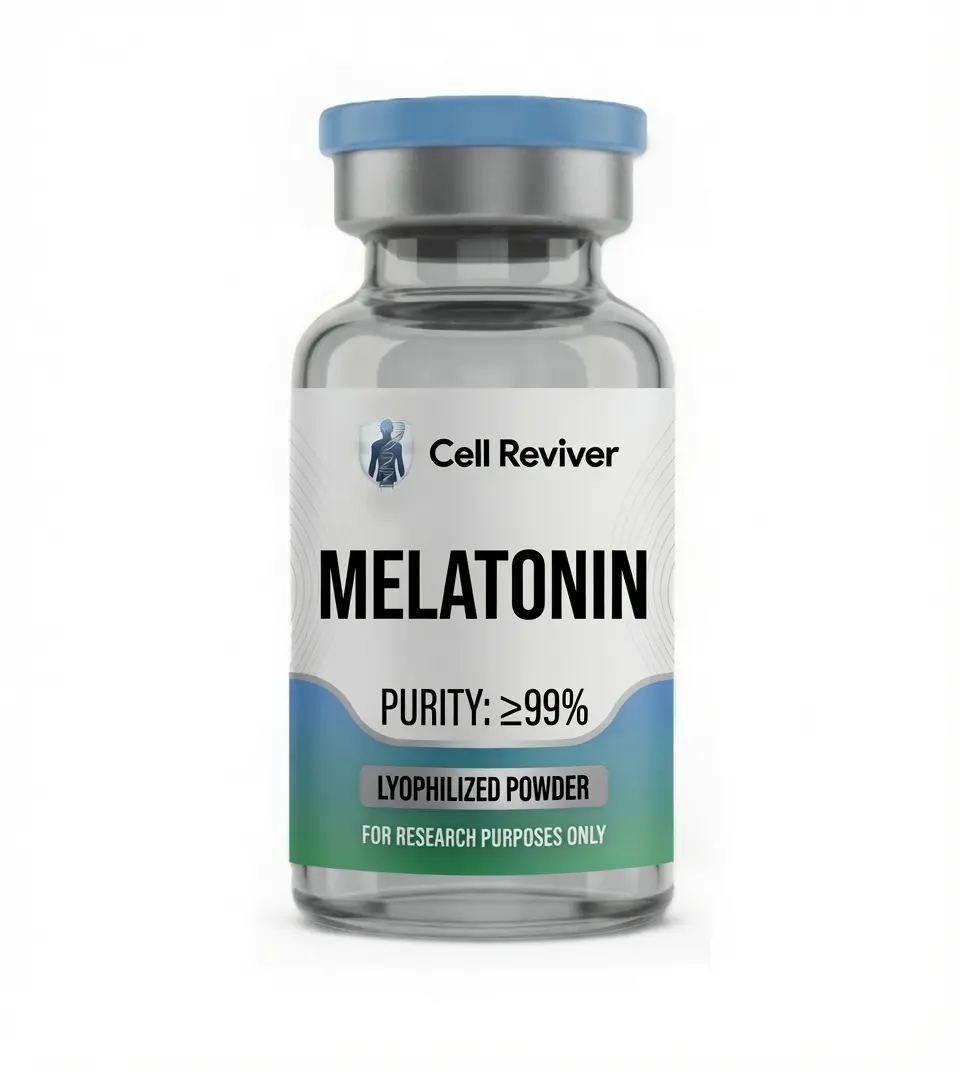
Melatonin Research Information
Sleep & Circadian Rhythm Regulator
For Sleep & Wellness Research
️ Important: This information is for educational and research purposes only. Always consult with a qualified healthcare professional before use.
Contents
What is Melatonin?
Melatonin is a naturally occurring hormone produced by the pineal gland that plays a critical role in regulating the sleep-wake cycle and circadian rhythms. It is chemically known as N-acetyl-5-methoxytryptamine and is synthesized from the essential amino acid tryptophan via serotonin.
Melatonin production is stimulated by darkness and inhibited by light, making it a key regulator of the body's internal clock. Beyond sleep regulation, melatonin has powerful antioxidant and anti-inflammatory properties, making it a compound of interest in various research applications. Melatonin is available in pen and freeze-dried vial formulations for research purposes.
How Melatonin Works
Melatonin works through multiple mechanisms to regulate sleep and protect cellular health:
Circadian Rhythm
Regulates sleep-wake cycle through MT1 and MT2 receptors in the brain
Antioxidant
Directly scavenges free radicals and stimulates antioxidant enzymes
Mitochondrial Protection
Protects mitochondrial function and reduces oxidative stress
Melatonin also regulates the immune system, exerts anti-inflammatory effects, and modulates various signaling pathways. Its ability to cross the blood-brain barrier makes it particularly relevant for neurological research.
Research Applications
Sleep Research
Investigating sleep-wake regulation, insomnia, and circadian rhythm disorders
Neuroprotection
Studying neuroprotective effects in neurodegenerative conditions
Antioxidant Research
Exploring melatonin's free radical scavenging and oxidative stress protection
Immune Function
Investigating immunomodulatory effects and inflammatory response regulation
Clinical Studies
Sleep & Circadian Rhythm Research
- Melatonin supplementation has been shown to improve sleep onset, duration, and quality
- Effective in treating circadian rhythm disorders, including jet lag and shift work disorder
- Studies demonstrate benefits for insomnia, particularly in older adults
Antioxidant & Neuroprotective Effects
- Melatonin is a potent antioxidant that protects against oxidative damage
- Supports mitochondrial function and reduces oxidative stress
- Demonstrates neuroprotective effects in various research models
Immunomodulatory Properties
- Melatonin modulates immune system function and inflammatory responses
- Regulates cytokine production and immune cell activity
- Has shown anti-inflammatory effects in various research models
Interactive Dosing Guide
Select your vial size and dose to see the corresponding volume, clicks, dosing frequency, and how many doses per vial:
️ Step 1: Select Your Vial Size
Step 2: Select Your Dose
Vial Size
10mg Vial
Selected Dose
1 mg
Doses per Vial
10 doses
Pen Clicks
30 clicks
Volume
0.30 mL
Protocol Level
Level 2 (Standard)
Recommended Schedule
Once daily before bed - Maintenance Phase
️ Do not change your dose unless advised by a qualified professional.
Protocol Level Summary
Based on typical research protocols: 0.5-5 mg taken 30-60 minutes before bedtime.
| Protocol Level | Target Dose | Frequency | Pen Clicks | Volume (mL) | Who It\'s For |
|---|---|---|---|---|---|
| Level 1 (Starting) | 0.5 mg | Once daily | 15 clicks | 0.15 mL | New users, first 2 weeks |
| Level 2 (Standard) | 1 mg | Once daily | 30 clicks | 0.30 mL | After 2 weeks, maintenance |
| Level 3 (Advanced) | 2-3 mg | Once daily | 60-90 clicks | 0.60-0.90 mL | If more response needed |
| Level 4 (Maximum) | 5 mg | Once daily | 150 clicks | 1.50 mL | Experienced users only |
️ Do not change your dose unless advised by a qualified professional.
Vial Users (Insulin Syringe)
Add 3mL of bacteriostatic water to your freeze-dried vial and mix gently. After reconstitution, use the table below to draw your dose:
Vial Size
10mg vial with 3mL bac water
| Dose | Frequency | Units on Syringe | Volume (mL) | Protocol Level |
|---|
️ Always use a new sterile needle and syringe for each injection.
️ Safety & Precautions
Do not use if you:
- Are allergic to melatonin or any ingredients
- Are pregnant or breastfeeding
- Have autoimmune conditions (consult a healthcare professional first)
- Are taking blood thinners or immunosuppressants
Common side effects:
- Drowsiness (desired effect for sleep research)
- Mild headache or dizziness (rare)
- Vivid dreams or nightmares (rare)
- Mild gastrointestinal discomfort
️ Warning: If you experience severe allergic reactions, difficulty breathing, or signs of anaphylaxis, seek immediate medical help.
References
- Melatonin and its role in sleep regulation and circadian rhythms. Journal of Pineal Research.
- Melatonin as a potent antioxidant and neuroprotective agent. Antioxidants & Redox Signaling.
- Melatonin and immune function: Research and clinical applications. International Journal of Molecular Sciences.
This information is for educational and research purposes only. Always consult with a qualified healthcare professional.
Last updated: July 2026