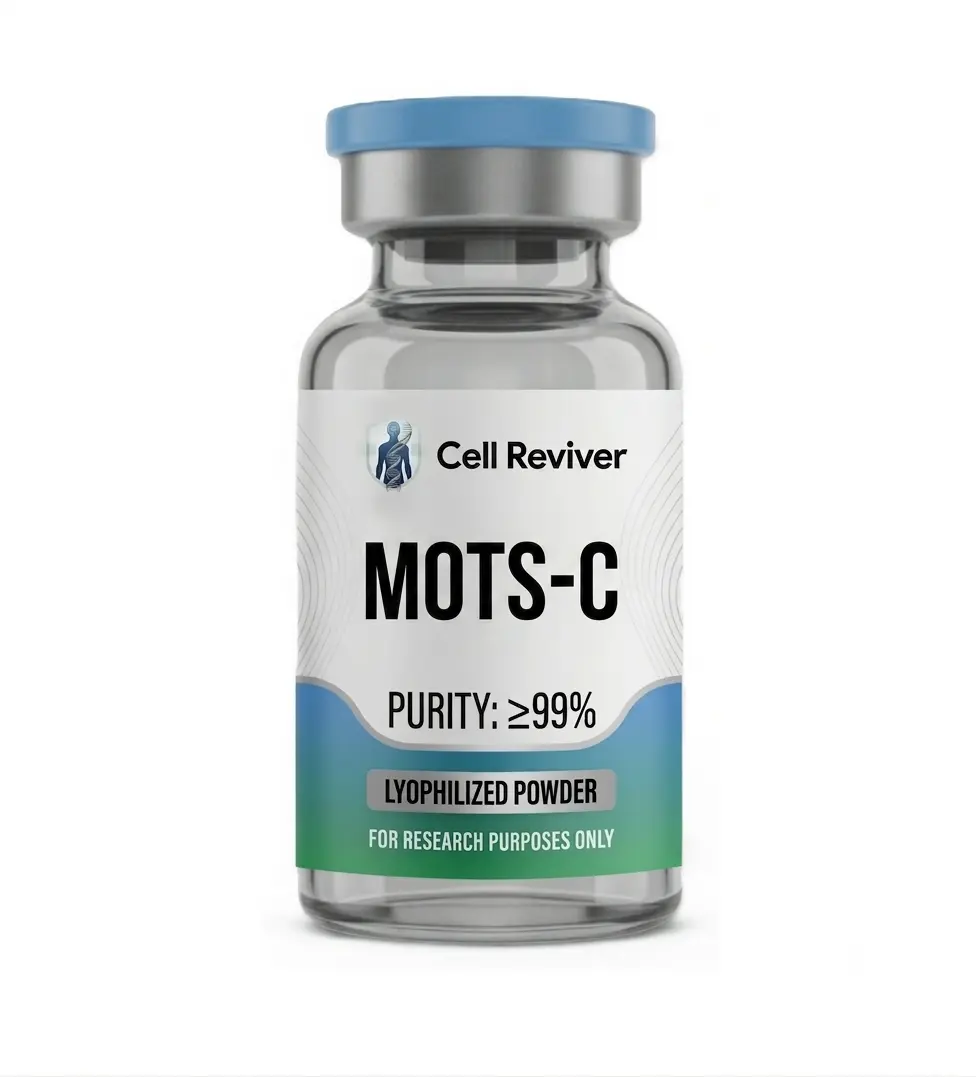
MOTS-c Research Information
Mitochondrial-Derived Peptide
For Metabolic & Energy Research
️ Important: This information is for educational and research purposes only. Always consult with a qualified healthcare professional before use.
Contents
What is MOTS-c?
MOTS-c is a mitochondrial-derived peptide (MDP) encoded by the 12S rRNA region of mitochondrial DNA that plays a critical role in metabolic regulation, energy production, insulin sensitivity, and fat metabolism. It is unique among peptides because it is encoded within mitochondrial DNA, unlike most peptides encoded in nuclear DNA.
MOTS-c is significantly expressed in response to stress or exercise and translocates to the nucleus, where it regulates the expression of stress adaptation-related genes with antioxidant response elements (ARE). MOTS-c is available in pen and freeze-dried vial formulations for research purposes.
How MOTS-c Works
MOTS-c works through the Folate-AICAR-AMPK pathway, influencing energy metabolism, insulin resistance, inflammatory response, exercise, and aging:
Energy Metabolism
Stimulates glucose utilization and fat oxidation
Insulin Sensitivity
Improves insulin sensitivity and glucose metabolism
Gene Regulation
Translocates to nucleus to regulate stress adaptation genes
MOTS-c has exercise mimetic activity that elicits beneficial effects on metabolism and exercise capacity.
Research Applications
Metabolic Health
Improves insulin sensitivity and glucose metabolism in obesity and diabetes research
Exercise & Performance
Exercise mimetic activity that enhances metabolism and exercise capacity
Neuroprotection
Reduces neurological severity and inhibits inflammatory pathways
Reproductive Health
Increases GnRH, testosterone, LH, and FSH levels in research models
Clinical Studies
Metabolic Health & Insulin Sensitivity
- MOTS-c targets skeletal muscle and enhances glucose metabolism
- Stimulates glucose utilization, fat oxidation, and reduces inflammation
- Protects against experimental models of metabolic disease
Exercise & Physical Performance
- MOTS-c has exercise mimetic activity that elicits beneficial effects on metabolism
- A 16-week exercise intervention significantly increased MOTS-c levels
- Post-exercise MOTS-c levels associated with reductions in fat mass, HOMA-IR, and CRP
Neuroprotection
- In traumatic brain injury models, MOTS-c (50 mg/kg) reduced neurological severity scores by 45%
- Improved rotarod performance in research models
- Inhibited the HMGB1/TLR4/NF-kB inflammatory pathway
Interactive Dosing Guide
Select your vial size and dose to see the corresponding volume, clicks, dosing frequency, and how many doses per vial:
️ Step 1: Select Your Vial Size
Step 2: Select Your Dose
Vial Size
5mg Vial
Selected Dose
0.5 mg
Doses per Vial
10 doses
Pen Clicks
30 clicks
Volume
0.30 mL
Protocol Level
Level 1 (Starting)
Recommended Schedule
3 times weekly - Loading Phase
️ Do not change your dose unless advised by a qualified professional.
Protocol Level Summary
Based on typical research protocols: 5mg three times per week (MWF) for 4-8 weeks, or 10mg once weekly for up to 10 weeks.
| Protocol Level | Target Dose | Frequency | 5mg Clicks | 10mg Clicks | 40mg Clicks | Who It\'s For |
|---|---|---|---|---|---|---|
| Level 1 (Starting) | 0.5 mg | 3x weekly | 30 clicks | 15 clicks | 3.75 clicks | New users, first 4 weeks |
| Level 2 (Standard) | 1 mg | 3x weekly | 60 clicks | 30 clicks | 7.5 clicks | After 4 weeks, maintenance |
| Level 3 (Advanced) | 2 mg | 3x weekly | 120 clicks | 60 clicks | 15 clicks | If more response needed |
| Level 4 (Maximum) | 5 mg | 3x weekly | 300 clicks | 150 clicks | 37.5 clicks | Experienced users only |
️ Do not change your dose unless advised by a qualified professional.
Vial Users (Insulin Syringe)
Add 3mL of bacteriostatic water to your freeze-dried vial and mix gently. After reconstitution, use the table below to draw your dose:
Vial Size
5mg vial with 3mL bac water
| Dose | Frequency | Units on Syringe | Volume (mL) | Protocol Level |
|---|
️ Always use a new sterile needle and syringe for each injection.
️ Safety & Precautions
Do not use if you:
- Are allergic to MOTS-c or any ingredients
- Are pregnant or breastfeeding
- Have pre-existing medical conditions (consult a healthcare professional first)
Common side effects:
- Mild injection site reactions
- Initial fatigue or mild headache
- Gastrointestinal discomfort (rare)
️ Warning: If you experience severe allergic reactions, difficulty breathing, or signs of anaphylaxis, seek immediate medical help.
References
- MOTS-c: A mitochondrial-derived peptide for metabolic regulation. Journal of Molecular Medicine.
- MOTS-c targets skeletal muscle and enhances glucose metabolism. Cell Metabolism.
- Exercise mimetic activity of MOTS-c. Nature Communications.
This information is for educational and research purposes only. Always consult with a qualified healthcare professional.
Last updated: July 2026