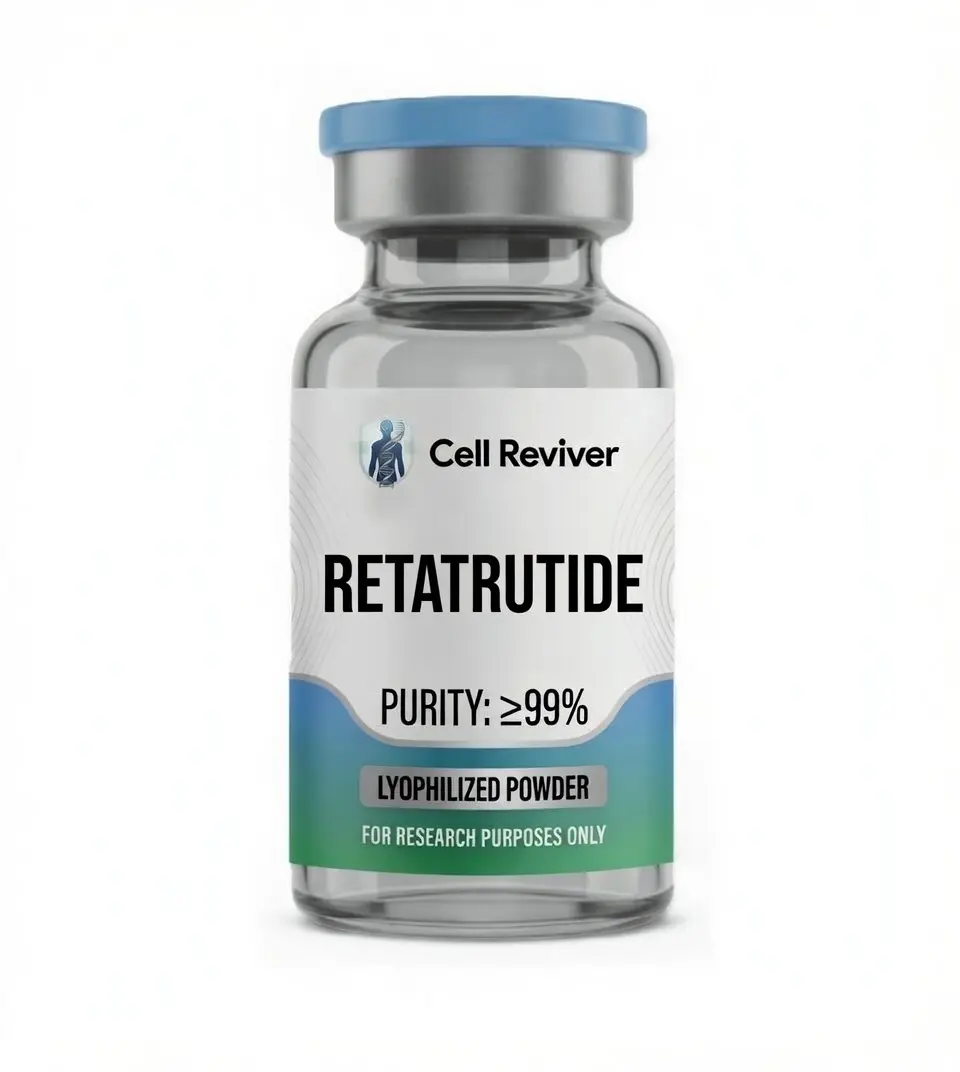
Retatrutide Research Information
GLP-1 / GIP / Glucagon Receptor Agonist
Triple Hormone Receptor Agonist for Metabolic Research
⚠️ Important: This information is for educational and research purposes only. Always consult with a qualified healthcare professional before use.
📑 Contents
🔬 What is Retatrutide?
Retatrutide (LY3437943) is a novel single-molecule triple hormone receptor agonist that targets three key receptors involved in metabolic regulation:
- • GLP-1 receptor – Regulates appetite and insulin secretion
- • GIP receptor – Enhances insulin sensitivity
- • Glucagon receptor – Increases energy expenditure and fat metabolism
This triple-agonist approach is distinct from other medications in its class. Unlike semaglutide which activates only the GLP-1 receptor, or tirzepatide which activates GLP-1 and GIP, retatrutide uniquely targets all three receptors.
⚡ How Retatrutide Works
Retatrutide mimics three naturally occurring hormones that regulate appetite, blood sugar, and energy balance:
GLP-1
Reduces appetite, slows digestion, enhances insulin secretion
GIP
Improves insulin sensitivity, supports metabolic health
Glucagon
Increases energy expenditure, promotes fat metabolism
Combined, these mechanisms promote reduced food intake, improved insulin response, and increased calorie burning.
📋 Research Applications
Retatrutide has been studied across multiple clinical trials, with research focusing on:
Obesity & Weight Management
Evaluated for weight reduction in individuals with obesity or overweight
Type 2 Diabetes
Assessed for glycemic control (HbA1c reduction) in type 2 diabetes
Cardiometabolic Health
Significant improvements in blood pressure, lipids, waist circumference, and liver fat
Metabolic Research
Investigating effects on metabolic dysfunction-associated steatotic liver disease (MASLD), osteoarthritis, and sleep apnea
📊 Clinical Studies
Phase 2 Obesity Trial (Jastreboff et al., NEJM 2023)
In a Phase 2 trial involving 338 adults with obesity or overweight, retatrutide demonstrated substantial weight loss:
| Dose | Weight Loss at 24 Weeks | Weight Loss at 48 Weeks |
|---|---|---|
| 1 mg | −7.2% | −8.7% |
| 4 mg | −12.9% | −17.1% |
| 8 mg | −17.3% | −22.8% |
| 12 mg | −17.5% | −24.2% |
| Placebo | −1.6% | −2.1% |
Key finding: At the 12 mg dose, participants lost an average of 24.2% of their body weight after 48 weeks.
💉 Interactive Dosing Guide
Select your pen size and dose to see the corresponding volume, clicks, dosing frequency, and how many doses per pen:
🖊️ Step 1: Select Your Pen Size
💊 Step 2: Select Your Dose
Pen Size
40mg Pen
Selected Dose
2.5 mg
Doses per Pen
16 doses
Pen Clicks
19 clicks
Volume
0.19 mL
Protocol Level
Level 1 (Starting)
Recommended Schedule
Once weekly - Once weekly - Loading Phase (Weeks 1-4)
⚠️ Do not change your dose unless advised by a qualified professional.
💉 Vial Users (Insulin Syringe)
Select your vial size to see the units on an insulin syringe (all vials use 3mL bac water):
⚠️ Safety & Precautions
Do not use if you:
- Are allergic to retatrutide or any ingredients
- Have type 1 diabetes
- Are pregnant or breastfeeding
Common side effects:
- Nausea (usually improves over time)
- Diarrhoea (usually improves over time)
- Vomiting
- Low blood sugar (if used with other anti-diabetic medication)
- Stomach pain, indigestion, constipation
- Decreased appetite, weight loss
⚠️ Warning: If you experience severe and ongoing stomach pain, difficulty breathing, or signs of a severe allergic reaction, seek immediate medical help.
📚 References
- Jastreboff AM, et al. "Triple–Hormone-Receptor Agonist Retatrutide for Obesity – A Phase 2 Trial." New England Journal of Medicine. 2023;389:514-526.
- Rosenstock J, et al. "Retatrutide, a GIP, GLP-1 and glucagon receptor agonist, for people with type 2 diabetes." The Lancet. 2023;402:529-544.
- ClinicalTrials.gov. "A Study of Retatrutide (LY3437943) in Participants With Obesity or Overweight." NCT04881760.
This information is for educational and research purposes only. Always consult with a qualified healthcare professional.
Last updated: July 2026