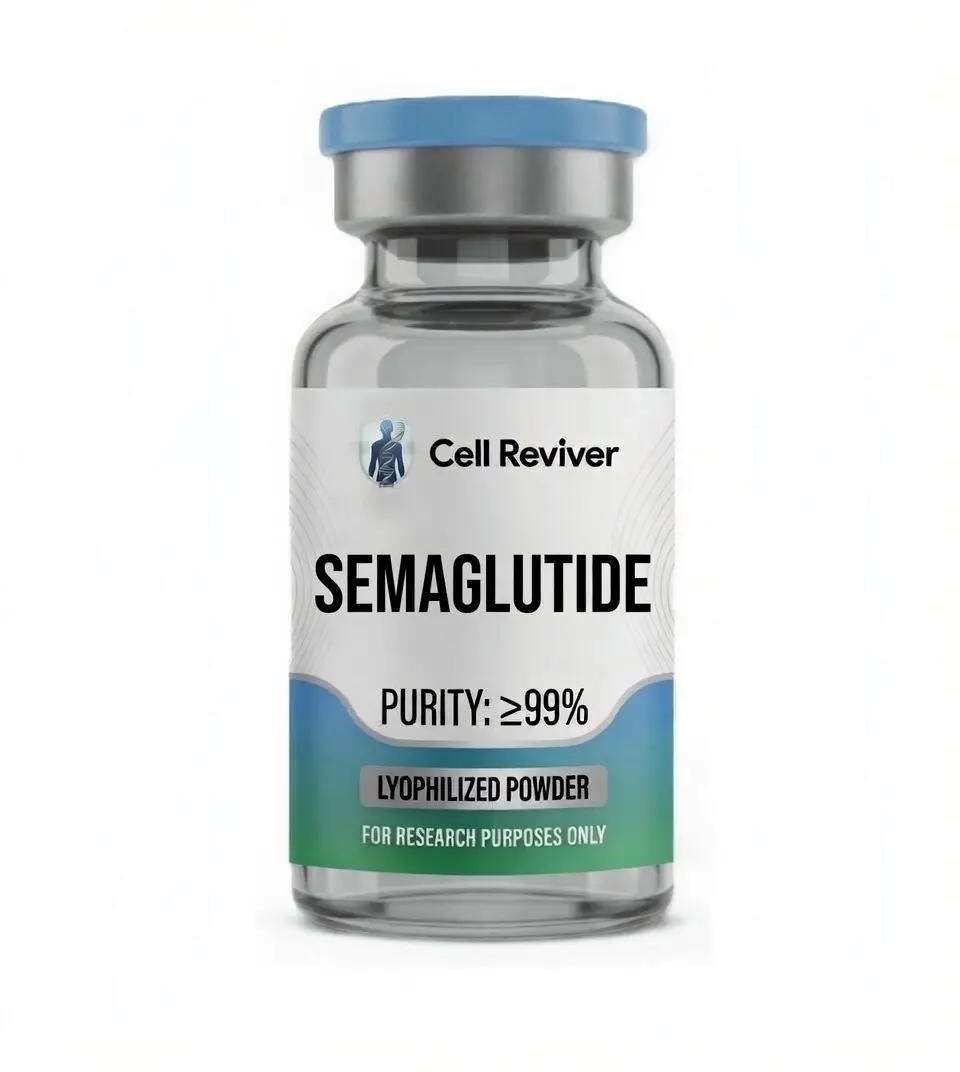
Semaglutide Research Information
GLP-1 Receptor Agonist
For Type 2 Diabetes & Obesity Research
⚠️ Important: This information is for educational and research purposes only. Always consult with a qualified healthcare professional before use.
📑 Contents
🔬 What is Semaglutide?
Semaglutide is a glucagon-like peptide-1 (GLP-1) receptor agonist used for the treatment of type 2 diabetes and chronic weight management. It is a GLP-1 analogue with 94% sequence homology to human GLP-1. Through strategic molecular modifications including specific amino-acid substitutions and the addition of a C18 fatty-diacid side chain to enhance albumin binding, the half-life was extended to approximately 160 hours, allowing for weekly dosing.
Semaglutide is available in pen and freeze-dried vial formulations for research purposes.
⚡ How Semaglutide Works
Semaglutide acts as a GLP-1 receptor agonist that selectively binds to and activates the GLP-1 receptor, the target for native GLP-1. The principal mechanism of protraction resulting in the long half-life is albumin binding, which results in decreased renal clearance and protection from metabolic degradation.
Pancreas
Stimulates insulin secretion and suppresses glucagon secretion in a glucose-dependent manner
Brain
Reduces hunger and food cravings; stimulates satiety center in hypothalamus
Cardiovascular
Vascular smooth muscle cell GLP-1Rs reduce blood pressure and improve renal outcomes
📋 Research Applications
Semaglutide has been extensively studied across multiple clinical trials, with research focusing on:
Type 2 Diabetes
Significant HbA1c reduction demonstrated in SUSTAIN 1–5 trials compared with placebo
Obesity & Weight Management
STEP 1–4 trials demonstrated significant weight reduction with semaglutide 2.4 mg weekly
Cardiovascular Health
SUSTAIN 6 showed 26% relative risk reduction in major adverse cardiovascular events
Metabolic Research
Investigating effects on metabolic dysfunction-associated steatotic liver disease (MASLD)
📊 Clinical Studies
STEP Program – Weight Management Trials
The Semaglutide Treatment Effect in People with Obesity (STEP) clinical trials evaluated the efficacy and safety of once-weekly subcutaneous semaglutide 2.4 mg.
| Study | Population | Weight Loss (Semaglutide) | Weight Loss (Placebo) |
|---|---|---|---|
| STEP 1 | Obesity/Overweight | −15.6% | −2.8% |
| STEP 2 | T2D + Obesity | −9.9% | −3.4% |
| STEP 3 | Obesity + Comorbidities | −16.5% | −5.8% |
| STEP 4 | Obesity/Overweight | −8.3% | +6.5% |
Key finding: Nearly two-thirds of patients experienced a body weight reduction of at least 15%.
SUSTAIN 6 – Cardiovascular Outcomes Trial
In a trial involving people with type 2 diabetes at high cardiovascular risk, semaglutide significantly reduced the risk of primary major adverse cardiovascular events (HR: 0.76; 95% CI: 0.62–0.92, p = 0.0062).
Key finding: The cardioprotective effects of semaglutide appear to be independent of weight loss, suggesting direct cardiovascular benefits.
💉 Interactive Dosing Guide
Select your pen size and dose to see the corresponding volume, clicks, dosing frequency, and how many doses per pen:
🖊️ Step 1: Select Your Pen Size
💊 Step 2: Select Your Dose
Pen Size
30mg Pen
Selected Dose
0.25 mg
Doses per Pen
120 doses
Pen Clicks
2.5 clicks
Volume
0.025 mL
Protocol Level
Level 1 (Starting)
Recommended Schedule
Once weekly - Loading Phase (Weeks 1-4)
⚠️ Do not change your dose unless advised by a qualified professional.
📋 Protocol Level Summary
Based on clinical trial protocols:
| Protocol Level | Target Dose | Frequency | Pen Clicks | Who It\'s For |
|---|---|---|---|---|
| Level 1 (Starting) | 0.25 mg | Once weekly | 2.5 clicks | New users, weeks 1-4 |
| Level 2 (Loading) | 0.5 mg | Once weekly | 5 clicks | Weeks 5-8 |
| Level 3 (Standard) | 1.0 mg | Once weekly | 10 clicks | Weeks 9-12 |
| Level 4 (Maintenance) | 2.4 mg | Once weekly | 24 clicks | Week 13+ maintenance |
⚠️ Do not change your dose unless advised by a qualified professional.
💉 Vial Users (Insulin Syringe)
Add 3mL of bacteriostatic water to your freeze-dried vial and mix gently. After reconstitution, use the table below to draw your dose:
Vial Size
30mg vial with 3mL bac water
| Dose | Frequency | Units on Syringe | Volume (mL) | Protocol Level |
|---|
⚠️ Always use a new sterile needle and syringe for each injection.
⚠️ Safety & Precautions
Do not use if you:
- Have a personal or family history of medullary thyroid carcinoma (MTC) or MEN-2 syndrome
- Are allergic to semaglutide or any ingredients
- Have type 1 diabetes
- Are pregnant or breastfeeding
Common side effects:
- Nausea (44% of patients)
- Vomiting (24% of patients)
- Diarrhea (20% of patients)
- Constipation
- Abdominal pain
- Decreased appetite
⚠️ Warning: If you experience severe and ongoing stomach pain, difficulty breathing, or signs of a severe allergic reaction, seek immediate medical help.
📚 References
- Kommu S, Whitfield P. Semaglutide. StatPearls Publishing; 2024.
- Zhou J, Husain M, Li Y, et al. Effect of semaglutide versus placebo on cardiorenal outcomes by prior cardiovascular disease and baseline body mass index: Pooled post hoc analysis of SUSTAIN 6 and PIONEER 6. Diabetes Obes Metab. 2025;27(10):5706-5715.
- Rubino D, Angelene H, Fabricatore A, Ard J. Efficacy and safety of semaglutide 2.4 mg by race and ethnicity: A post hoc analysis of three randomized controlled trials. Obesity (Silver Spring). 2024;32(7):1268-1280.
- STEP UP Trial Group. Once-weekly semaglutide 7·2 mg in adults with obesity (STEP UP): a randomised, controlled, phase 3b trial. 2025.
- Ezhilarasan D. Mechanism of Semaglutide in MASLD Treatment: Where Is the Master Key? J Gastroenterol Hepatol. 2025;40(9):2163-2175.
- CADTH Reimbursement Review. Semaglutide (Wegovy): Percentage Change From Baseline to Week 68 in Body Weight for STEP 1 to STEP 4 Studies. NIH.
This information is for educational and research purposes only. Always consult with a qualified healthcare professional.
Last updated: July 2026