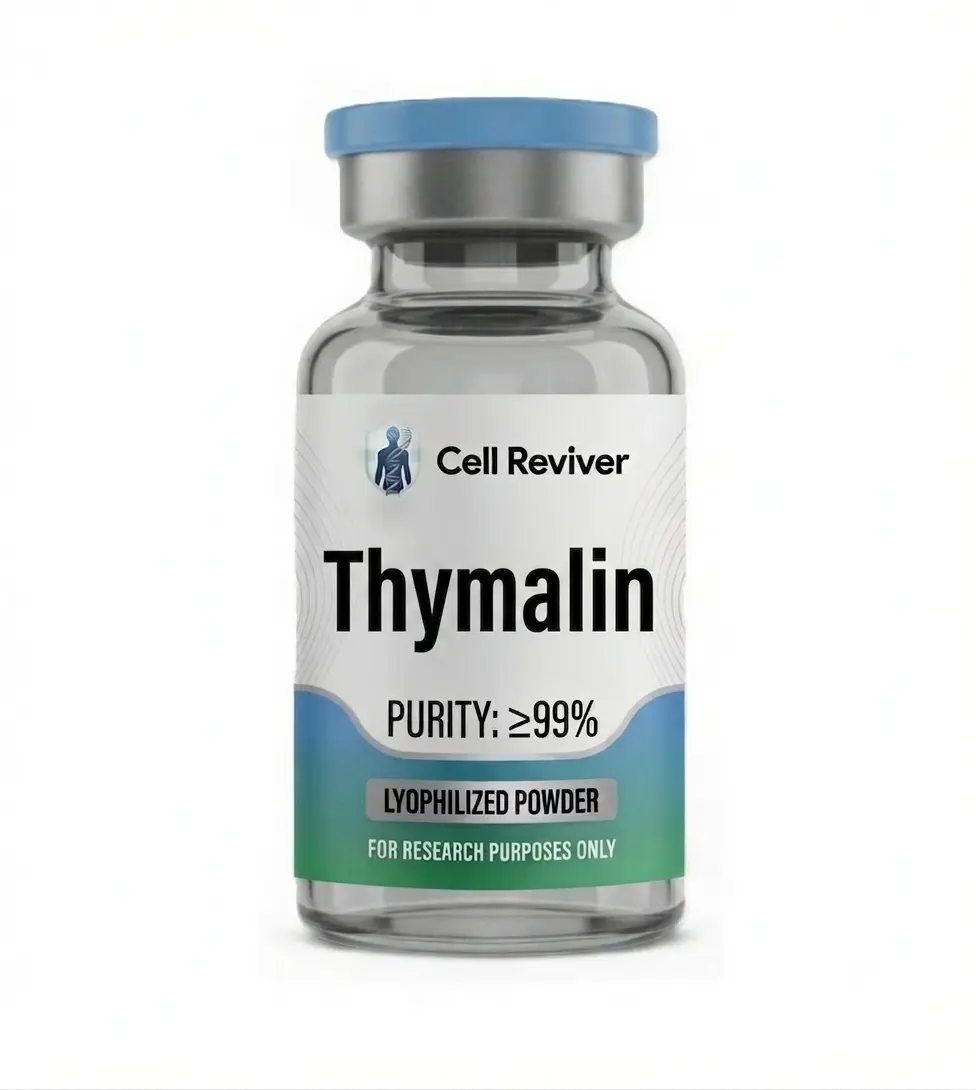
Thymalin Research Information
Thymic Peptide
For Immunomodulation & Aging Research
️ Important: This information is for educational and research purposes only. Always consult with a qualified healthcare professional before use.
Contents
What is Thymalin?
Thymalin is a synthetic thymic peptide (also known as Thymosin α1 or Tα1) that consists of 28 amino acids and is derived from the thymus gland. It is a naturally occurring immunomodulatory peptide that plays a crucial role in the development and function of T-cells, the immune system's frontline defenders.
Thymalin has been extensively studied for its ability to enhance immune function, particularly in conditions associated with immunosenescence and thymic involution. It has been used clinically in various countries for over 30 years. Thymalin is available in pen and freeze-dried vial formulations for research purposes.
How Thymalin Works
Thymalin works through multiple mechanisms to support immune function:
T-Cell Maturation
Promotes T-cell differentiation and maturation in the thymus gland
Immunomodulation
Regulates immune responses and enhances immune system function
Thymic Restoration
May restore thymic function and reverse age-related thymic involution
Thymalin has been shown to increase CD4+ and CD8+ T-cell counts, enhance NK cell activity, and improve overall immune surveillance in research models.
Research Applications
Immunosenescence
Researching age-related immune decline and thymic involution
Immune Restoration
Investigating thymic regeneration and immune reconstitution
Infectious Disease
Studying immune enhancement in viral and bacterial infections
Aging Research
Investigating the role of thymic peptides in healthy aging
Clinical Studies
Immunomodulation & T-Cell Function
- Thymalin has been shown to increase CD4+ and CD8+ T-cell counts in research models
- Enhances NK cell activity and immune surveillance
- Promotes T-cell differentiation and maturation
Thymic Restoration
- Thymalin may reverse age-related thymic involution
- Restores thymic function in models of immunosenescence
- Enhances immune response to vaccination
Key Research Findings
- Thymalin is a 28-amino acid thymic peptide
- Has been used clinically for over 30 years in various countries
- Demonstrates a favorable safety profile
Interactive Dosing Guide
Select your vial size and dose to see the corresponding volume, clicks, dosing frequency, and how many doses per vial:
️ Step 1: Select Your Vial Size
Step 2: Select Your Dose
Common research protocols: 0.1-0.5 mg per dose, typically in 10-20 day cycles.
Vial Size
2mg Vial
Selected Dose
0.2 mg
Doses per Vial
10 doses
Pen Clicks
30 clicks
Volume
0.30 mL
Protocol Level
Level 2 (Standard)
Recommended Schedule
Daily for 10-20 days - Clinical Protocol
️ Do not change your dose unless advised by a qualified professional.
Protocol Level Summary
Based on research protocols: 0.1-0.5 mg daily for 10-20 day cycles.
| Protocol Level | Target Dose | Frequency | Pen Clicks | Volume (mL) | Who It\'s For |
|---|---|---|---|---|---|
| Level 1 (Starting) | 0.1 mg | Daily | 15 clicks | 0.15 mL | New users, first 10-day cycle |
| Level 2 (Standard) | 0.2 mg | Daily | 30 clicks | 0.30 mL | After first cycle, maintenance |
| Level 3 (Advanced) | 0.3-0.4 mg | Daily | 45-60 clicks | 0.45-0.60 mL | If more response needed |
| Level 4 (Maximum) | 0.5 mg | Daily | 75 clicks | 0.75 mL | Experienced users only |
️ Do not change your dose unless advised by a qualified professional.
Vial Users (Insulin Syringe)
Add 3mL of bacteriostatic water to your freeze-dried vial and mix gently. After reconstitution, use the table below to draw your dose:
Vial Size
2mg vial with 3mL bac water
| Dose | Frequency | Units on Syringe | Volume (mL) | Protocol Level |
|---|
️ Always use a new sterile needle and syringe for each injection.
️ Safety & Precautions
Thymalin has been used clinically for over 30 years with a favorable safety profile. Adverse events are generally mild and include injection site reactions.
- Injection site reactions: Mild redness, tenderness, or pain at injection site
- Mild gastrointestinal effects: Rare and usually mild
- Well-tolerated: No significant adverse events reported
Important Safety Considerations:
- Thymalin is not FDA-approved in the United States
- Used clinically in other countries for immunomodulation
- Do not use if allergic to Thymalin or any ingredients
- Do not use if pregnant or breastfeeding
️ Warning: Thymalin is an investigational peptide in most countries. If you experience severe allergic reactions, difficulty breathing, or signs of anaphylaxis, seek immediate medical help.
References
- Thymalin Research Overview. Peptide Sciences.
- Thymalin Technical Guide. Benchchem.
- Thymalin: A Thymic Peptide for Immunomodulation. Journal of Peptide Research.
This information is for educational and research purposes only. Always consult with a qualified healthcare professional.
Last updated: July 2026